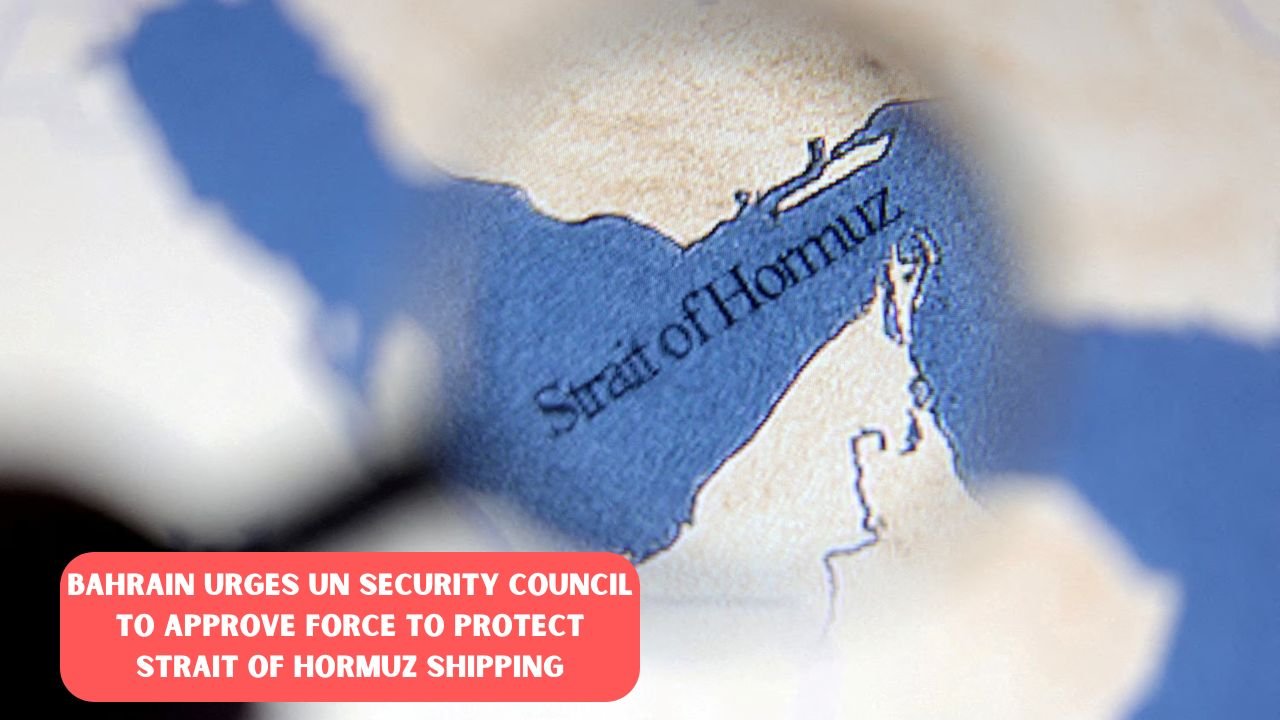
A sharp escalation in maritime tensions has pushed Bahrain to request authorization from the United Nations Security Council (UNSC) to use military force in the Strait of Hormuz. This vital waterway carries nearly 20% of the world’s oil supply, making the situation a major global concern.
Why the Strait of Hormuz Matters
The Strait of Hormuz is one of the most critical energy chokepoints in the world. Before the crisis, over 20 million barrels of oil and a significant share of liquefied natural gas (LNG) passed through it daily. Any disruption here directly impacts global energy prices, supply chains, and economic stability.
Background of the 2026 Crisis
The crisis intensified after Iran’s military response to joint U.S. and Israeli operations on February 28, 2026. Following this, Iran warned that unauthorized vessels entering the strait would be treated as hostile.
Since early March, more than 20 commercial ships have been attacked using drones, sea mines, and missiles. Even U.S. naval vessels have come under fire, significantly raising the stakes in the region.
Bahrain, which hosts the U.S. Navy’s Fifth Fleet, has also faced direct missile strikes on its ports, increasing urgency for international intervention.
Bahrain’s Proposal at the United Nations
Bahrain has submitted a resolution under Chapter VII of the UN Charter. This would legally allow military action to protect shipping lanes and ensure freedom of navigation.
The proposal has support from several nations, including:
- United Arab Emirates (UAE)
- United Kingdom
- Japan
- Other allied countries
However, key UNSC members Russia and China have shown reluctance, emphasizing diplomatic solutions and signaling possible vetoes.
Impact on Global Trade and Economy
| Category | Impact Level | Key Concern |
|---|---|---|
| Energy Supply | Critical | 20% of global oil and LNG disrupted |
| Shipping Traffic | Severe | Up to 97% decline in vessel movement |
| Insurance Costs | Extreme | War-risk premiums up 4–6 times |
| Commodity Prices | High | Fertilizer shortages and price spikes |
| Maritime Safety | Critical | 20+ confirmed vessel attacks |
The crisis has already driven oil prices up to around $120 per barrel and significantly disrupted global supply chains.
Legal and Diplomatic Challenges
Bahrain’s proposal is grounded in international law, particularly the UN Convention on the Law of the Sea (UNCLOS), which guarantees freedom of navigation.
If approved, a multinational naval task force could escort commercial vessels and engage threats directly. However, lack of consensus within the UNSC complicates the process.
If the resolution fails, a coalition of nations may act independently under Article 51 (collective self-defense), which could challenge the authority of the UN.
Rising Global Involvement
The crisis has evolved beyond a regional issue into a global security concern. Countries like South Korea and Australia are already participating in discussions for a potential naval coalition.
This reflects the global dependence on the Strait of Hormuz, affecting economies from Europe to Asia.
What Happens Next?
The UNSC is currently debating the issue, but time is running out for a peaceful resolution. Bahrain has urged immediate action to stop attacks and ensure safe passage.
The longer the disruption continues, the more severe the economic consequences will be worldwide, including inflation, energy shortages, and trade instability.
FAQs
Q1 Why is the Strait of Hormuz so important?
It is the world’s most critical energy chokepoint, handling about one-fifth of global oil and a large portion of LNG supplies.
Q2 What is Bahrain requesting from the UN?
Bahrain is seeking approval under Chapter VII of the UN Charter to allow military protection of commercial shipping and removal of threats.
Q3 Has the UN approved military action?
As of March 2026, the UN Security Council has condemned the attacks but has not yet authorized military force due to ongoing debates and possible vetoes.