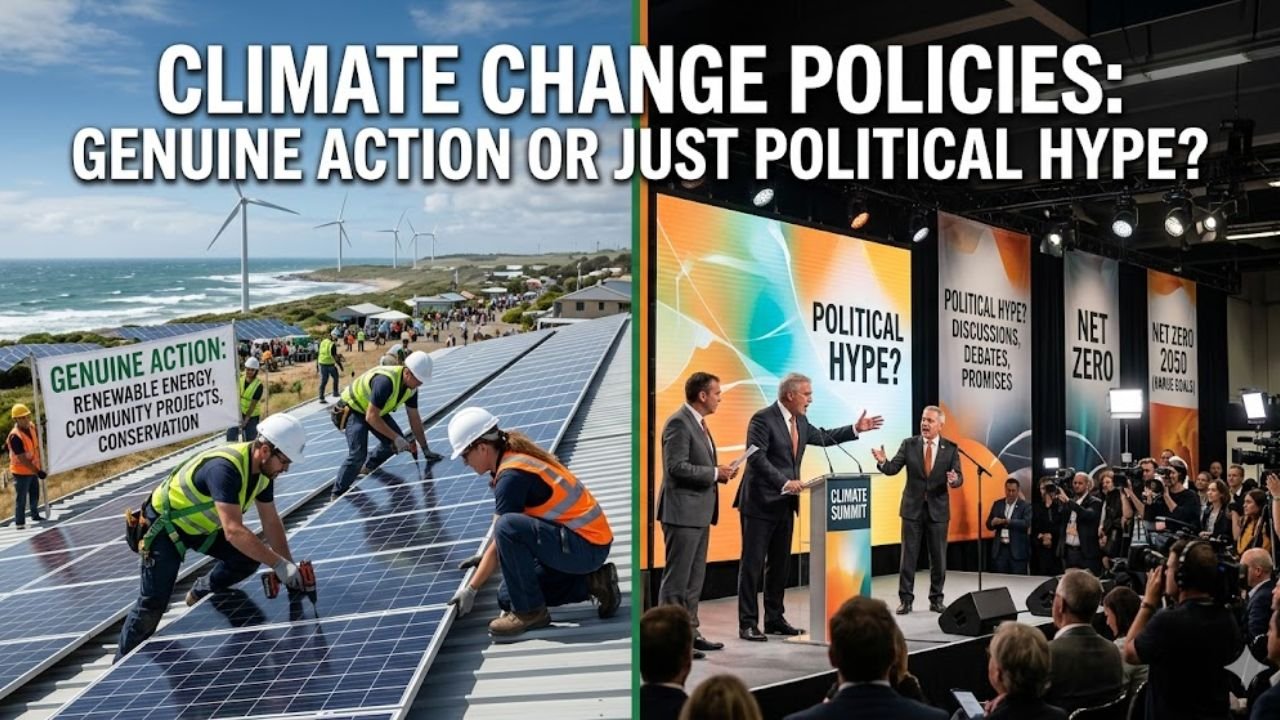
Climate policy today is evaluated less on the problem of climate change itself and more on the effectiveness of policy responses. Skepticism is high, as critics note the extreme investment needed to decarbonize transportation and infrastructure, juxtaposed with apparent political indifference to rising CO2 levels. Many question whether political action is genuine or simply advanced opportunistic pragmatism.
The Promises and Reality of Climate Policy
The central criticism of climate policies is the lack of short-term actions, economic tools, or societal mechanisms to meet long-term goals. Many nations legislate net-zero targets by 2050 but fail to implement unpopular taxes or regulations needed to achieve them. This creates political hype, where pre-legislation sets the burden on future administrations rather than current action.
Despite this, genuine changes are occurring. Initiatives like the European Union Green Deal and US infrastructure investments have mobilized billions into green technologies, creating lasting economic momentum that transcends political cycles.
Decoding Global Policy Efficacy
Carbon emissions alone are a poor measure of progress. A better metric is carbon intensity of GDP—how economic growth is decoupled from pollution growth. Some countries have successfully lowered emissions per unit of GDP, demonstrating effective policy implementation.
| Policy Type | Main Goal | Real World Impact (2026) |
|---|---|---|
| Carbon Pricing | Encourage low-carbon technology | 75+ jurisdictions adopted CP, though implementation varies widely |
| EV Sales | Outlaw fossil fuel-based cars | 25% of new vehicles sold globally are EVs |
| Reforestation Grants | Carbon sequestration | Initially low success, now moving towards rewilding initiatives |
| Renewable Grants | Reduce cost of solar and wind energy | Solar is now the most economical new electricity source |
The Effects of Corporates and Greenwashing
Greenwashing allows corporations to market themselves as environmentally friendly without substantive change, often using carbon offsets rather than reducing emissions. In 2026, transparency laws now require reporting of Scope 3 emissions, making voluntary commitments mandatory for the first time and shifting from PR posturing to legally binding action.
Innovation Driving Political Will
Governments tend to act when the cost of inaction exceeds the cost of action. Extreme weather events have created immediate economic incentives, including disaster relief and insurance expenditures, pushing governments to fund green hydrogen, battery storage, and other green technologies. Economic gain and environmental benefit are increasingly aligned, fostering genuine change.
Accountability and Transparency
Policy enforcement is key. Without enforcement, climate policies remain symbolic. Romania’s default on its climate promises highlights the need for accountability. The emergence of “Climate Clubs” and border adjustment taxes ensures countries failing to meet standards face trade penalties. While progress is messy and inconsistent, structural changes in trade and industrial regulation are paving the way for a lower-carbon future.
FAQs
Q1 What are the signs of a good climate policy?
Effective climate policy includes clear funding sources, legal mechanisms to impose penalties for non-compliance, and defined steps for implementation.
Q2 What is the biggest obstacle to substantial climate progress?
Political cycles are the main obstacle. Difficult decisions often take effect after an administration ends, discouraging leaders from implementing necessary but unpopular measures.
Q3 Are personal actions as important as government policy?
Individual actions help, but systemic change in grids, industry, and regulation is required to achieve significant global emission reductions.